 AGVHub
AGV System Architecture and Infrastructure
How is an AGV system structured? Overview of components, communication, and integration – from simple setups to enterprise solutions.
Overview
The infrastructure of an AGV system can vary greatly depending on requirements. From simple standalone solutions to fully integrated enterprise systems, there are different levels of expansion.
Variant 1: Standalone (Sensors Only)
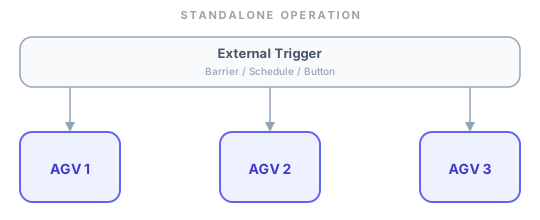
The simplest form – AGVs operate independently with their own sensors. Transport demands are triggered directly at the vehicle via external signals such as light barriers, buttons, or fixed schedules. No network infrastructure is required, making this ideal for pilot projects or single-route applications.
Characteristics
- No central control – each AGV decides independently
- Demand creation: External triggers (light barrier, button, fixed schedule) send commands directly to each AGV
- Simple collision avoidance via sensors
- Suitable for: 1-3 vehicles, simple routes, low complexity
- Limitation: No optimization, no central overview
Variant 2: With Fleet Manager
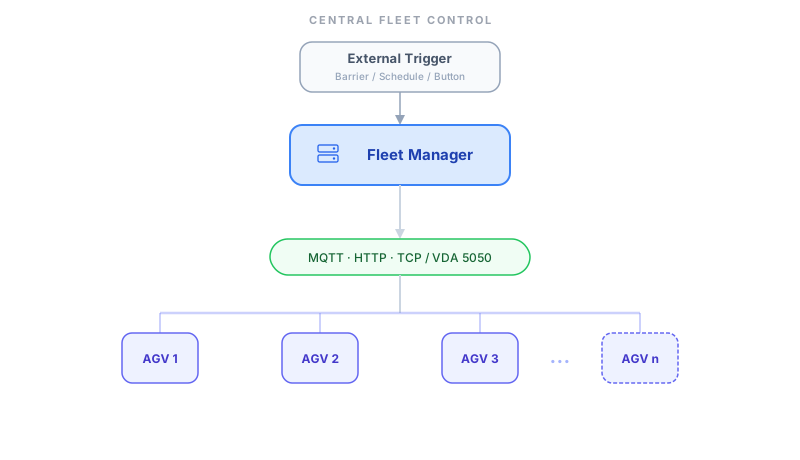
Central coordination via a fleet manager that receives transport demands and dispatches them to the optimal vehicle. Communication uses protocols like MQTT, HTTP, or TCP. The fleet manager enables route optimization, deadlock prevention, and real-time monitoring across the entire fleet.
Characteristics
- Central order distribution and route planning
- Demand creation: Same external triggers (light barrier, button, schedule) but routed through the fleet manager for central dispatching
- Deadlock prevention through coordinated paths
- Real-time visualization of all vehicles
- Communication: MQTT, HTTP, TCP – VDA 5050 as open standard, plus proprietary protocols
- Suitable for: 3-20 vehicles, complex layouts
Components
| Component | Function |
|---|---|
| Fleet Manager | Distribute orders, calculate routes, resolve conflicts |
| MQTT / HTTP / TCP | Message routing between components |
| AGVs | Execute transport orders, report status |
Variant 3: Enterprise (With ERP Integration)
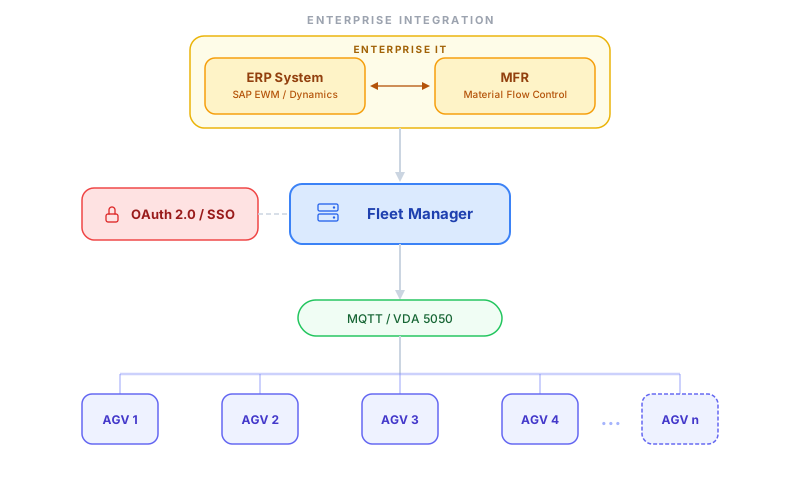
Full integration into corporate IT. Transport orders originate from the ERP system and are coordinated by a Material Flow Controller (MFR) before reaching the fleet manager. Authentication is handled via OAuth 2.0 / SSO, and all actions are logged for audit compliance.
Characteristics
- ERP + MFR: Orders from ERP (e.g. SAP EWM, Microsoft Dynamics, Oracle WMS) coordinated by Material Flow Control (e.g. SHANA) to the Fleet Manager
- OAuth 2.0 / SSO: Secure authentication via corporate IdP
- Audit Logs: Traceability of all actions
- Suitable for: 10+ vehicles, corporations, regulated industries
Security Architecture
| Layer | Component | Security |
|---|---|---|
| Application | Dashboard, API | OAuth 2.0, RBAC |
| Transport | MQTT, REST | TLS 1.3, mTLS |
| Network | WiFi, LAN | VLAN, Firewall |
| Vehicle | AGV | Certificates, Secure Boot |
Comparison of Variants
| Criterion | Standalone | With Fleet Manager | Enterprise |
|---|---|---|---|
| Vehicle Count | 1-3 | 3-20 | 10+ |
| Central Control | |||
| ERP Integration | Optional | ||
| OAuth / SSO | |||
| Complexity | Low | Medium | High |
| Cost | $ | $$ | $$$ |
Which Variant Fits Me?
Standalone
- Pilot project
- Single transport route
- Minimal budget
With Fleet Manager
- Multiple vehicles
- Complex routes
- Scaling planned
Enterprise
- ERP system in place
- IT security requirements
- Corporate standards