 AGVHub
AGV Vehicle Types: Which One Fits Your Application?
From forklift AGVs to underride vehicles: Overview of all AGV vehicle types, their payloads, applications, and how to choose the right one.
Not Every AGV Looks the Same
When people think of AGVs, they often picture a single type of vehicle. In reality, the range is enormous: from compact robots weighing a few dozen kilograms to heavy-duty transporters moving loads of 30 tons or more across a factory floor.
Choosing the right vehicle type is one of the earliest and most consequential decisions in any AGV project. It determines your infrastructure requirements, system cost, and ultimately whether the automation delivers on its promise.
Pallet and Unit Load Handling
The largest category of AGVs revolves around moving pallets, containers, and similar unit loads.
Forklift AGV
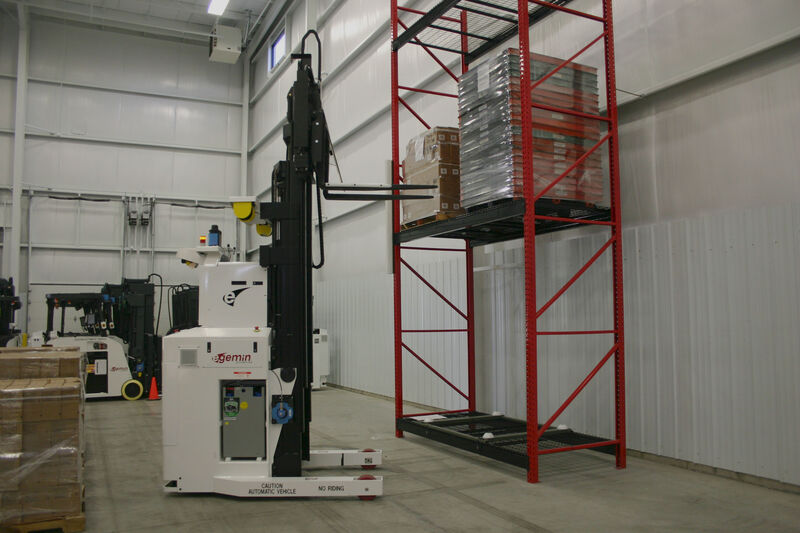
Picks up and places pallets at varying heights, from floor level to high-rack positions. Available as purpose-built AGVs designed from scratch for automation, or as standard forklifts retrofitted with sensors and navigation. Retrofitted models often retain a manual mode for dual-use operation.
Typical payload: up to 1.5 t | Use case: Warehouse storage, production supply
Strengths
- Handles the most common load carrier (pallets)
- Retrofitted models allow gradual transition from manual fleets
- Wide range of vendors and configurations
Limitations
- Purpose-built models: higher cost, no manual fallback
- Retrofitted models: larger footprint, automation compromises
- Requires well-organized pallet positions for reliable pickup
Piggyback / Conveyor AGV
Carries loads on its back at a fixed height, typically transferring them via integrated conveyor belts, roller conveyors, or chain mechanisms to and from stationary equipment.
Typical payload: up to 1.5 t | Use case: Production logistics, connecting manufacturing cells
Strengths
- Seamless integration with conveyor infrastructure
- Fast, automated load transfer without manual intervention
- Well-suited for standardized load carriers
Limitations
- Fixed transfer height reduces flexibility
- Requires matching conveyor stations
- Load type variety is limited
Cart and Trolley Transport
Underride AGV
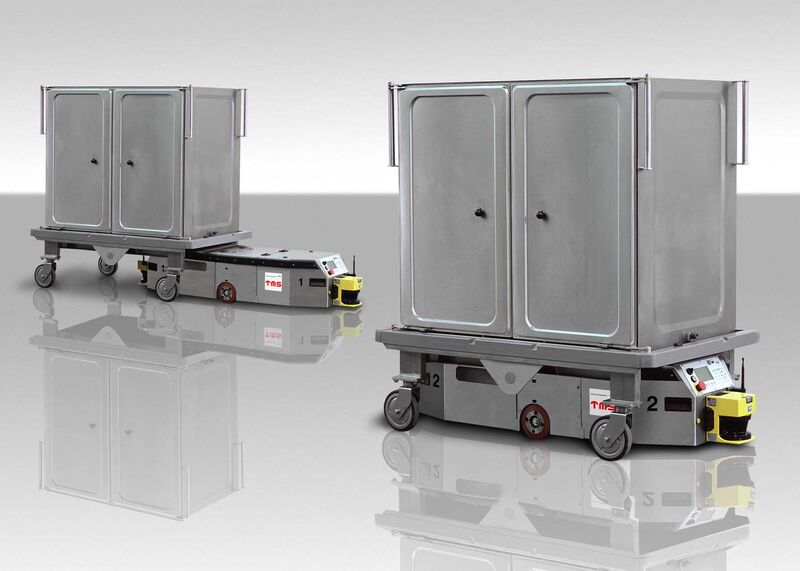
A low-profile vehicle that drives underneath carts, trolleys, or roll containers, lifts them, and transports them to the destination. Used across industries, from production floors to hospitals where stainless steel versions transport laundry, food, and medication.
Typical payload: several hundred kg | Use case: Hospital logistics, e-commerce, production line supply
Strengths
- Very compact, navigates tight spaces easily
- No special load carriers needed (uses existing carts)
- Quick pick-up and drop-off cycles
Limitations
- Limited to loads on wheeled carriers
- Payload typically lower than forklift AGVs
- Carts must be positioned accurately for pickup
Tugger AGV
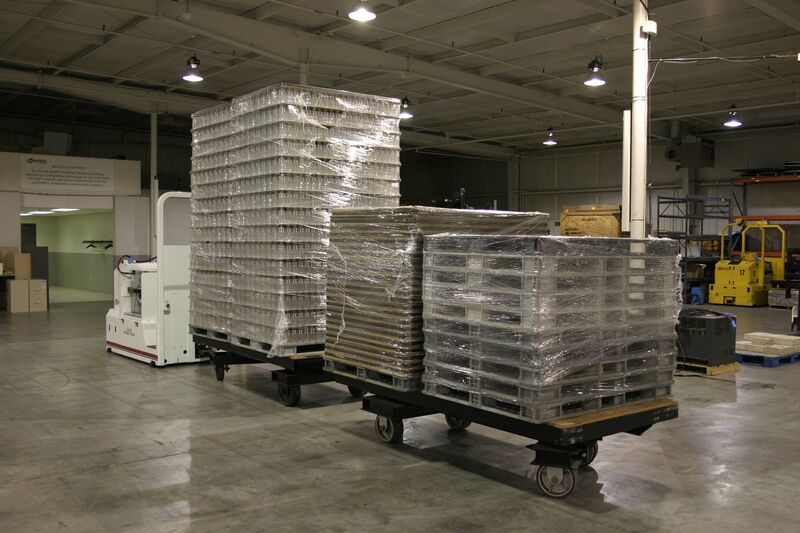
Pulls one or more trailers along a route, similar to a logistics train. Delivers materials to multiple stations in a single run.
Typical payload: several tons (total trailer load) | Use case: Assembly line supply, milk-run delivery
Strengths
- High throughput per trip (multiple trailers)
- Replaces manual tugger trains directly
- Efficient for cyclic delivery routes
Limitations
- Needs wide aisles and generous turning radii
- Trailer coupling/decoupling adds complexity
- Not suitable for point-to-point on-demand transport
Small Parts and High-Volume Picking
Mini-AGV
Small, lightweight vehicles designed for transporting bins, totes, and trays in high-volume picking or distribution environments. Often deployed in large fleets.
Typical payload: under 300 kg | Use case: E-commerce fulfillment, small parts distribution, lab logistics
Strengths
- Low cost per unit, scales well in fleets
- Fits in narrow aisles and tight spaces
- High throughput through sheer fleet size
Limitations
- Payload limited to small items
- Fleet management complexity grows with size
- Not suitable for heavy or bulky loads
Heavy and Specialized Transport
Heavy-Load AGV
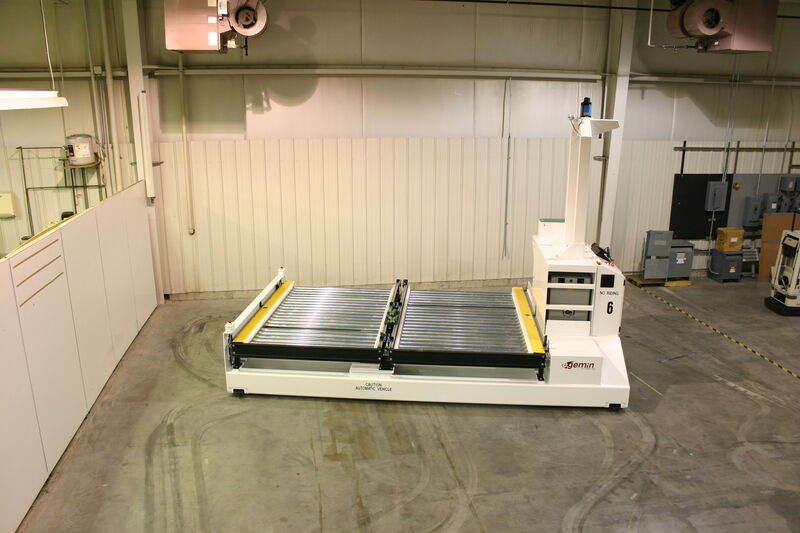
Designed for extremely heavy or oversized loads. Often custom-engineered for a specific application such as moving coils, large components, or containers.
Typical payload: many tons up to 50+ t | Use case: Steel industry, paper mills, container handling
Strengths
- Handles loads that no other AGV type can move
- Reduces safety risk of heavy manual transport
- Reliable, continuous heavy-duty operation
Limitations
- High investment cost
- Demanding floor requirements (load capacity, flatness)
- Large footprint, limited maneuverability
Outdoor AGV
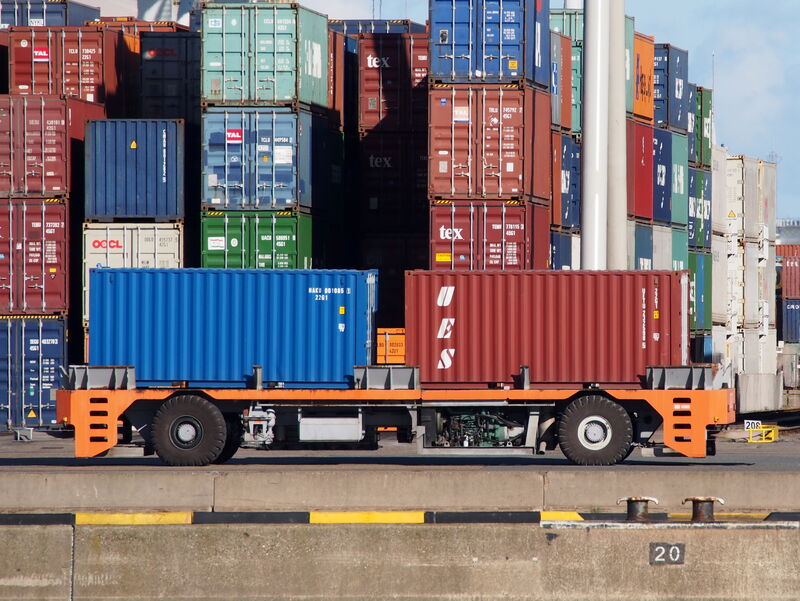
Operates in open-air environments between buildings, loading docks, or storage yards. Built to handle weather, uneven surfaces, and longer distances.
Typical payload: several tons | Use case: Yard logistics, building-to-building transport, port operations
Strengths
- Connects indoor and outdoor logistics seamlessly
- Eliminates truck shuttles between buildings
- High payload capacity
Limitations
- Weather exposure (rain, ice, UV) limits sensor options
- Rougher surfaces require robust chassis
- Higher energy consumption due to gradients and wind
Assembly AGV
Carries a workpiece or assembly through sequential stations at a controlled pace. Workers or robots perform operations at each stop, and the AGV moves the product forward.
Typical payload: up to 1 t | Use case: Automotive assembly, electronics manufacturing
Strengths
- Flexible alternative to fixed conveyor lines
- Easy to reconfigure assembly sequences
- Variable cycle times per station
Limitations
- Requires precise positioning at each station
- Vehicle availability directly impacts production output
- More complex than simple transport tasks
How to Choose the Right Type
The right vehicle type depends on a handful of practical questions about your specific situation.
What are you moving?
Pallets point toward forklift AGVs. Bins and totes suggest mini-AGVs. Carts and trolleys are underride territory. Identify your load carrier first.
How heavy is the load?
Light loads open up the widest selection. Medium loads between half a ton and two tons are forklift and conveyor AGV territory. Beyond that, you are looking at heavy-load specialists.
Indoor, outdoor, or both?
Indoor-only gives you the most options. Outdoor operation narrows the field to specialized vehicles with weather protection and robust navigation.
Point-to-point or cyclic routes?
On-demand, taxi-style transport favors forklift and underride AGVs. Fixed cyclic routes with multiple stops are a natural fit for tugger trains.
Beyond Standard Types
The vehicle types above cover the vast majority of AGV projects. But specialized environments sometimes call for custom solutions: AGVs with stainless steel surfaces for food and beverage production, vehicles rated for explosive atmospheres in chemical plants, units that operate inside freezers at -25 °C, or AGVs that integrate with hospital elevator and door systems. These are typically custom-engineered in close collaboration between the vendor and the end customer.
Conclusion
There is no single "best" AGV type. The right choice depends on what you are moving, how heavy it is, where it needs to go, and how your logistics processes are structured. Start with the load carrier and the environment, then narrow down the vehicle types that match. In many cases, the optimal solution combines two or more types in a coordinated fleet.